All about stormwater management
Stormwater management is one of the most critical challenges facing modern developments. As cities and towns expand, impermeable surfaces like roads, car parks, and buildings prevent rainfall from soaking naturally into the ground. Instead, water rushes into drainage networks at high speed, overwhelming pipes and watercourses, causing localised flooding and reducing the groundwater that sustains our water supplies.
There are two proven approaches to solving this problem: attenuation and infiltration.
- Attenuation systems temporarily store excess rainfall and release it at a controlled rate, protecting downstream drainage infrastructure and reducing flood risk.
- Infiltration systems allow water to soak back into the ground, recharging groundwater reserves while reducing the volume entering public sewers.
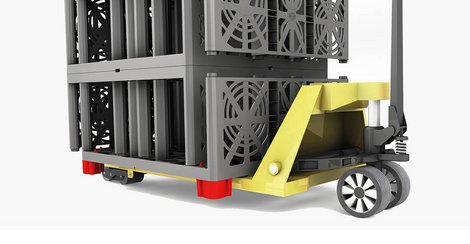
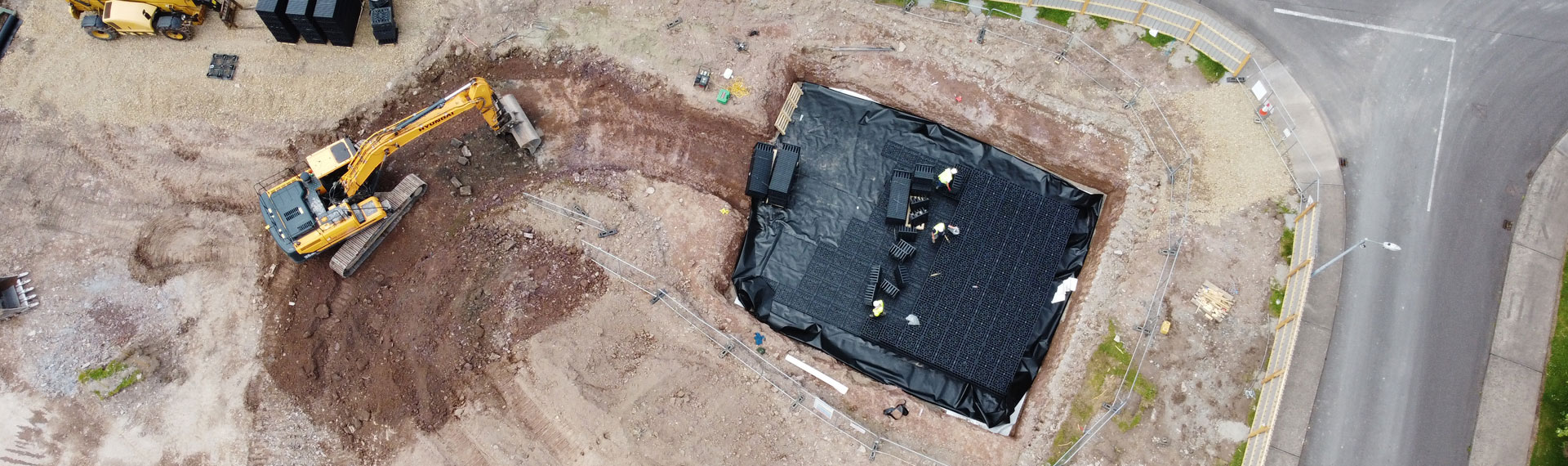
Both approaches can be delivered using geocellular crates, modular storage systems that sit below ground and offer high-capacity storage in a compact footprint. When designed and installed correctly, attenuation and infiltration systems deliver significant benefits.
They reduce localised flooding on development sites and in surrounding communities. They protect and restore groundwater reserves, which are essential for drinking water supplies and ecosystem health. And they help developments meet Ireland's strict planning and environmental regulations, which increasingly demand that new construction does not worsen flood risk or degrade water quality.